
Before They Even Book: Campground Storytelling Marketing Across the Guest Journey
A guest meets your campground many times before they ever arrive. They see you in search results, scan your Google Business Profile, browse your website, watch your social content, read reviews, open an email, and move through your booking process. Every touchpoint either strengthens your story or weakens it.
That is the focus of campground storytelling marketing across the guest journey.
A website may describe a “quiet lakeside retreat.” Your social media may promote loud, late-night weekend events. Your reviews may mention noise, crowded facilities, and peaceful weekday stays.
None of those statements may be completely false. But together, they create uncertainty.
And when guests feel uncertain, they keep looking.
Why campground storytelling marketing needs one consistent thread
What does your campground promise?
Maybe it is a peaceful place for couples and retired travelers. Maybe it is an activity-filled family destination. Maybe it is a convenient, comfortable home base for exploring a national park.
Your story does not need to appeal to everyone. It needs to make the right guest feel recognized.
That is where the Roasted Marshmallow Method™ begins: with your ideal guest, the experience you genuinely provide, and the details that make your park the right fit.
Think of this as your story spine.
Your story spine is the central promise that every marketing touchpoint reinforces. It is not a slogan you copy and paste everywhere. It is the consistent idea beneath your:
- Search listings
- Google Business Profile
- Website pages
- Social media content
- Email campaigns
- Reviews and review responses
- Booking experience
- Pre-arrival and post-stay communication
When these pieces agree, guests feel more confident. Consistency reduces the mental work required to choose your campground.

How to map your campground story before guests book
Where does your story show up first?
The answer will vary by guest. One person may discover you through Google Maps. Another may see a friend’s post on Instagram. Someone else may receive your email after staying nearby last year.
Here is where to focus.
1. Search results and AI summaries
Your search result is often the first sentence a future guest sees about your campground.
It should quickly communicate:
- Where you are located
- What type of stay you offer
- Who your campground is best suited for
- A meaningful differentiator
- The next action guests can take
In 2026, this matters beyond traditional blue-link results. Google may summarize information from your website, Business Profile, reviews, and other sources.
Google’s official guidance on AI features in Search says there are no special technical requirements for appearing in AI Overviews or AI Mode. Standard fundamentals still matter: helpful people-first content, crawlable pages, internal links, quality images, accurate Business Profile information, and structured data that matches the visible page.
Because the reality is this: Google can only summarize the story it can find.
A clear, consistent story gives search systems better information to work with.
2. Google Business Profile
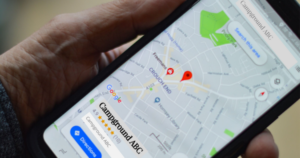
Your Google Business Profile is not just a directory listing. For many guests, it is the first full preview of your campground.
Review your:
- Primary and secondary categories
- Description
- Hours and seasonal updates
- Amenities and attributes
- Booking link
- Photos
- Recent posts
- Review responses
Does your profile position your campground the same way your website does?
If your ideal guest wants a quiet, nature-focused escape, lead with the details that support that expectation. If your park is built around family activities, show the spaces and experiences that make that promise believable.
Also, keep facts current. An outdated photo of a closed amenity or an incorrect holiday schedule can damage trust before a guest reaches your website.
3. Your website
Your website should answer the questions guests ask after they become interested.
Start with the homepage, but do not stop there. Check the pages that support the booking decision:
- RV site pages
- Cabin or lodging pages
- Amenity pages
- Activities and events
- Local attractions
- Policies and FAQs
- Directions and arrival information
Use your story spine as a filter. Every page should help the right guest understand what staying with you will feel like.
Show the experience, not just the feature.
“Full hookups” is important. So is explaining whether those sites are pull-through, shaded, spacious, or designed for extended stays. “Pet-friendly” becomes more useful when guests can find information about walking areas, pet policies, and nearby trails.
Make expectations specific. Specificity builds confidence.
4. Social media
Social media should add personality and proof to your story.
It does not need to repeat your homepage. It should show the campground in motion:
- A seasonal guest’s favorite tradition
- A quiet morning near the water
- A family activity in progress
- A staff member helping a late arrival
- A pet-friendly area guests actually use
- A local attraction within easy reach
This is where Week 2’s UGC focus becomes especially valuable. Seasonal guests often help carry your story across the year because they know the rhythms, traditions, and small details that first-time visitors may miss.
Use guest-created content with permission, and connect it to the ideal guest you want to attract.
A photo of a campfire may be beautiful. A guest caption explaining how their family returns every fall tells a much stronger story about belonging and tradition.
5. Email marketing
Email gives you more control over the story because you are speaking directly to people who have already shown interest.
Use it to reinforce the promise established elsewhere:
- Welcome new subscribers with a clear introduction to your campground
- Share seasonal experiences that fit your positioning
- Feature guest stories and reviews
- Explain upcoming events honestly
- Provide useful planning details
- Invite past guests to return
Your newsletter should feel like the next chapter of the same story, not a completely different marketing voice. For a foundation, revisit 9 Simple Steps to Launch Your Campground Newsletter.
6. Reviews and review responses
Reviews are not separate from your marketing story. They are evidence of whether the story matches reality.
Look for repeated language. Do guests mention clean facilities, helpful staff, quiet mornings, easy access, family activities, or spacious sites?
Those patterns can help you identify what your campground is already known for.
BrightLocal’s 2025 Local Consumer Review Survey found that consumers continue to use reviews to research local businesses, with 74% saying they use two or more websites on average. The report also notes that detailed experiences, photos, videos, and thoughtful review responses influence trust.
Respond in a way that reinforces real strengths without sounding scripted.
If a guest mentions your peaceful setting, acknowledge it. If a guest raises a concern about weekend noise, respond honestly and explain what future guests should expect.
Your responses are part of the story future guests read.
7. Booking, pre-arrival, and post-stay communication
The booking process is where your promise becomes an expectation.
Make sure the reservation path confirms:
- What the guest booked
- What is included
- Site or accommodation details
- Check-in and check-out times
- Policies and fees
- Holiday or event-related conditions
- What guests should bring or plan for
Do not wait until arrival to reveal important information.
Your pre-arrival email should sound like the campground guests chose, while also preparing them for the actual experience. Your post-stay email should continue the relationship through a review request, guest story prompt, or invitation to plan another visit.
For holiday weekends, use a Holiday Weekend Checklist as an owner/operator marketing-prep tool. Confirm that your promotions, event details, booking availability, social posts, GBP information, and guest emails all tell the same story before demand peaks.
What happens when the story does not match?
Imagine a campground that promotes itself as a quiet retreat on its homepage.
Its social media heavily promotes party-friendly holiday events. Its Google Business Profile highlights family activities but says little about quiet hours. Reviews mention loud holiday weekends and peaceful midweek stays.
The campground may serve both audiences. That is not the problem.
The problem is that guests cannot easily understand which experience they are booking.

Be transparent about differences by season, site type, and event schedule. A family looking for an energetic holiday weekend may be delighted. A couple seeking quiet may choose a different date — or a different campground — if you explain the experience clearly.
Pew Research Center’s 2025 analysis of Google users and AI summaries found that users clicked a traditional search result in 8% of visits when an AI summary appeared, compared with 15% when one did not. The study also found that longer, question-based searches were more likely to produce AI summaries.
That means the information Google surfaces may shape a guest’s decision before they ever visit your website.
Try this three-touchpoint story audit today
You do not need to review every channel at once.
Choose three touchpoints:
- Your Google Business Profile
- Your homepage
- Your most recent social posts or reviews
Compare the:
- Language
- Photos
- Guest positioning
- Amenities
- Seasonal information
- Expectations about atmosphere
Then ask:
- Do these sources describe the same campground?
- Is one source outdated?
- Are guests mentioning strengths you do not feature?
- Is any channel promising an experience you do not consistently deliver?
Fix the biggest conflict first.
One accurate, well-connected story is more valuable than a dozen disconnected posts.
Your story should travel with the guest
The guest journey does not begin at check-in. It begins when someone first hears about your campground and starts imagining a stay.
That story continues through search, AI summaries, Google Business Profile, your website, social media, email, reviews, booking, arrival instructions, and follow-up communication.
Week 1 showed why Google summarizes what it can find. Week 2 showed how guest-created content provides evidence. Now, the next step is to connect those pieces into one recognizable experience.
Campground storytelling marketing works best when your ideal guest hears the same honest promise everywhere — and finds proof of it at every step.
Next, we will shift from the digital journey to the lived experience: seeing campground storytelling from the road, through the eyes of the guests who arrive, stay, and decide whether to return.